Writers live in two places simultaneously: the page and the mind's eye. When you write a scene — the way light falls through a broken window, the exact posture of a character who is trying not to cry — you see it. You've always been making films. They've just been private ones, running only for you.
AI filmmaking changes that. For the first time, the visual film you've been running in your head can be externalized — not as a rough storyboard, not as a mood board of reference images, but as actual moving footage. This guide is for writers who want to understand how that process works and how to use it without letting it flatten your creative voice.
Why Writers Are Better at This Than They Think
The conventional wisdom is that AI video generation requires technical knowledge — prompt engineering, camera angle vocabulary, knowledge of cinematographic terminology. This is true if you're using professional tools like Runway or working directly with model APIs.
But writers already possess the most important skill for this work: scene construction. You know how to establish atmosphere in three sentences. You know how to make a reader feel the weight of a room before anything happens in it. That ability — creating vivid, specific sensory pictures from language — is exactly what AI video models respond to.
The gap between a writer's prose and a working video prompt is smaller than it looks. You're not starting from zero. You're translating a skill you already have.
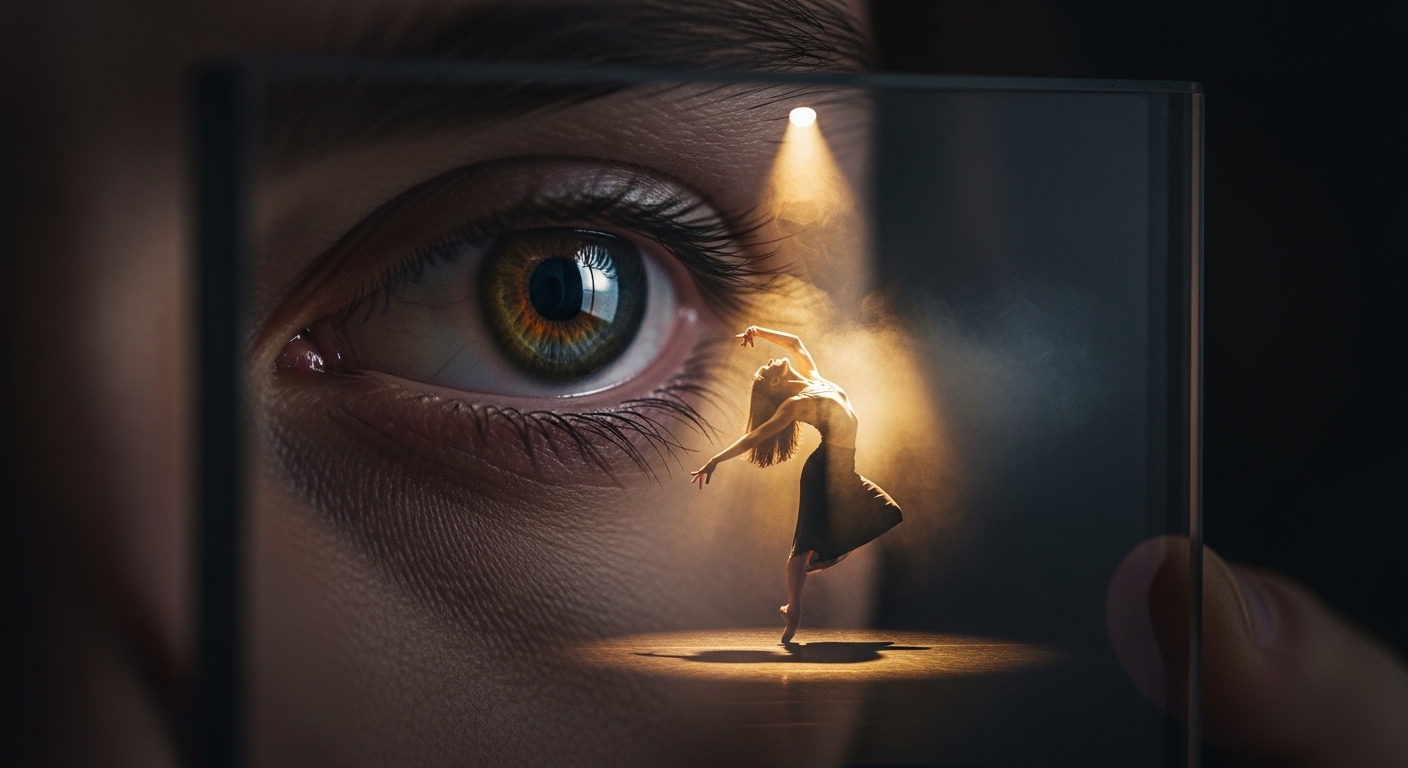
Writers have always seen their stories in motion. AI filmmaking makes that vision shareable.
The Difference Between Prose and a Video Scene
The main adjustment writers need to make is shifting from interiority to externality. Prose can live inside a character's head — their thoughts, their history, the memory that flickers through them as they watch the rain. Video can only show the outside.
This is not a limitation so much as a constraint that sharpens your thinking. When you strip away the interiority and ask "what would this scene look like to someone watching through a camera?", you often discover which physical details were carrying all the emotional weight.
For example: a character in grief. In prose, you might write paragraphs of inner monologue. For AI filmmaking, you translate that to: a woman sits at a kitchen table at 3am, still in her coat, staring at an untouched cup of coffee that has gone cold. The overhead light is harsh. She hasn't moved in a long time.
Same scene. Same emotion. Externalized.
How Story-First AI Filmmaking Works
Traditional AI video tools ask you to work like a cinematographer: describe the shot, the camera movement, the lighting setup, the lens choice. If you don't speak that language, the results are unpredictable.
Story-first tools like Plotfire Pro invert this. You write the scene as you would naturally — a paragraph, a description, a narrative moment. The system then runs a brief conversation with you to extract the creative specifics: tone, visual style, mood, pacing. It handles the translation from creative intent to technical prompt automatically.
The result is a one-minute short film clip that attempts to render your scene. You don't need to know what "motivated lighting" means or whether your scene should use a "rack focus" or a "dolly push". You just need to know what you want the viewer to feel.
Using AI Filmmaking Without Losing Your Voice
The risk with any generative tool is convergence toward the generic. AI models have aesthetic tendencies — they produce what they've seen most of. If you give a vague prompt, you get a vague output that looks like a thousand other AI videos.
The antidote is the same thing that makes your prose distinctive: specificity. Don't say "a sad scene in a cafe." Say "a man in his sixties, former long-distance runner, sits alone at a corner table in a Portuguese pastelaria, nursing an espresso. Morning light. He is reading a letter he has clearly read many times."
The specificity is what transfers. The more precisely you describe the physical world of your story, the more the output will feel like yours rather than like a generic AI aesthetic.
A few concrete practices:
- Name specific places, not categories."A beach in winter" is more evocative than "an outdoor scene." "A Soviet-era apartment building stairwell" more than "a hallway."
- Describe the light. Light is the primary variable in cinematography. Morning, afternoon, twilight, neon, fluorescent, candlelight — each carries completely different emotional valence.
- Name a film or photographer as reference."The color palette of early Wim Wenders" or "the texture of a Gregory Crewdson photograph" gives the model far more information than a paragraph of description.
- Tell it what you don't want.If you're generating a grounded realist scene, specify that it shouldn't be stylized or fantastical. Constraints help as much as directions.
What to Use It For
AI filmmaking is a tool, not an end in itself. Here are the most useful applications for writers:
- Visualizing a scene while writing.Generating a clip of a key scene mid-draft can anchor your sense of the story's visual world and keep you consistent across chapters.
- Creating a book trailer or pitch teaser.A one-minute film clip built from your story's opening scene is more immediate and shareable than a text excerpt.
- Stress-testing your imagery.If a scene that felt vivid on the page looks flat when rendered visually, it often means the prose is relying on abstraction rather than concrete detail. That's useful information.
- Exploring alternative versions.Generate the same scene with different tonal instructions — once as a thriller, once as a drama — and see which version feels true to the story you're trying to tell.
The gap between script and screen has never been smaller. What you write, you can now show.
A Note on Imperfection
AI-generated video is not perfect, and probably won't be for a while. Human hands distort. Faces blur under motion. Background elements occasionally do things that defy physics. These imperfections are real.
For writers, they are also often beside the point. What you are generating is not a finished film. It is a moving sketch — a rough externalization of a scene that previously only existed in your mind. Judged on that basis, even an imperfect clip can be extraordinarily useful.
The measure of success is not whether the video looks like a Hollywood production. It is whether watching it tells you something about your story that you couldn't see from the page alone.
The Writer's Advantage
AI filmmaking tools are proliferating. Most of the early users are technically minded — people who enjoy iterating on prompts and optimizing outputs. Writers, by contrast, are often slow to adopt new creative tools because they seem too technical or too foreign to the solitary, language-based work of writing.
That hesitation is worth overcoming. The writers who engage with these tools now — who learn to translate their prose sensibilities into visual prompts — will have a significant creative advantage over those who wait. The language of cinema is not alien to good writers. It is the same impulse, running in a different medium.
You've been making films in your head for as long as you've been writing. Now you can show people what they look like.
See your story on screen
Write a scene, answer a few questions about tone and mood, and get a one-minute short film delivered to your dashboard. Create your story →